Archives by date

You are browsing the site archives by date.

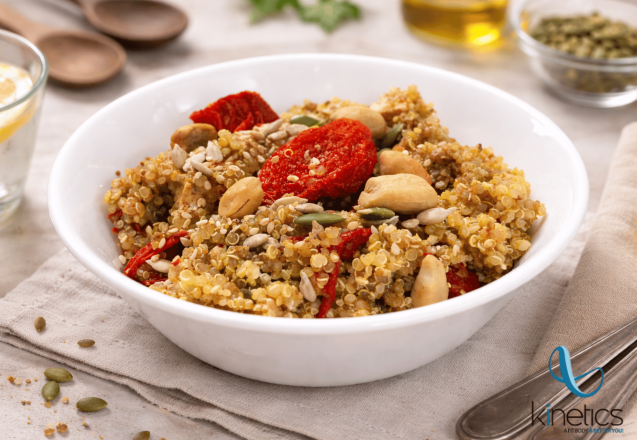
Quinoa, Tofu & Sundried Tomatoes Salad (Vegetarian/Vegan)

Quinoa, Tofu & Sundried Tomatoes Salad (Vegetarian/Vegan)

Courtesy of Maite

This vibrant, filling, protein-rich salad brings together fluffy quinoa, golden sautéed tofu, tender spinach, and bursts of flavor from dried tomatoes and crunchy pumpkin seeds. It’s satisfying enough to enjoy as a main dish, yet light and fresh—perfect for meal prep, lunch bowls, or a simple weeknight dinner.

Ingredients

  • 1 cup dry quinoa
  • 2 cups water or vegetable broth
  • 1 block (14 oz / 400 g) firm or extra-firm tofu, pressed and cubed
  • 2 Tbsp olive oil, divided
  • 2 cloves garlic, minced
  • ½ cup dried tomatoes (sun-dried or oven-dried), hydrated and chopped
  • 4 cups fresh spinach, roughly chopped
  • ¼ cup pumpkin seeds
  • ¼ cup almonds
  • 1 Tbsp honey (or agave or maple syrup for vegan option)
  • 1 Tbsp lemon juice or apple cider vinegar
  • 1 tsp Dijon mustard
  • Salt and black pepper, to taste
  • Optional: red pepper flakes, fresh herbs (parsley or basil), or a drizzle of tahini


Instructions

1- Hydrate the dried tomatoes in hot (not boiling) water for about 20 to 30 minutes.

2- Meanwhile, rinse the quinoa under cold water, until the water runs clear.

3- Combine the quinoa with water in a 2:1 ratio, bring to a boil, then cover and simmer on low for about 15 minutes until the water is absorbed and the grains are fluffy.

4- Heat 1 tablespoon of olive oil in a large skillet over medium heat. Add the tofu cubes and cook for 6–8 minutes, turning occasionally, until golden on all sides. Add the garlic, merken, and honey, stir well, and cook for 1 more minute. Remove from heat.

5- In a large bowl, whisk together the remaining 1 tablespoon olive oil, lemon juice, Dijon mustard, salt, and black pepper.

6- In the bowl, combine the cooked quinoa, tofu and dried tomatoes still warm, with the spinach, almonds and pumpkin seeds.

7- Toss gently until everything is well combined and the spinach slightly wilts.

8- Taste and adjust seasoning, adding extra lemon juice, salt, or pepper as needed.

9- Serve warm or chilled, topped with optional herbs, red pepper flakes, or a light drizzle of tahini if desired.


Nutrition facts per serving (1 bowl, ~300 g, ~10.5 oz):
Calories 404 kcal, Fat 22.3 g, Saturated Fat 3.5 g, Carbohydrates 38.6 g, Dietary Fiber 7.4 g, Sugars 8.0 g, Protein 16.7 g, Sodium 349 mg, Calcium 151 mg, Iron 4.5 mg, Potassium 714 mg, Vitamin C 23 mg.


This Changes Fitness After 40

This Changes Fitness After 40

Your Body Isn’t Broken — It’s Just Asking for a Different Plan

“According to the Office on Women’s Health, U.S. Department of Health & Human Services, the body naturally begins to lose about 3–5% of muscle mass per decade starting around age 30, especially if activity levels drop. This age-related muscle loss is part of a condition called sarcopenia. Sarcopenia is the loss of muscle and strength that happens with aging and inactivity, and it’s recognized as a health issue by government health agencies.” Read more here: https://womenshealth.gov/sarcopenia

The good news? With 8–12 weeks of smart training, strength, energy, and confidence tend to come roaring back—often stronger than before.

 “I turned 41 and it felt like my body switched languages,” Maya told us. “Once I changed up my plan, everything finally made sense.”

“I used to do hours of cardio or yoga but never really felt as strong as I have since I have been training at Kinetics,” said Mary.

What’s Actually Changing (and Why It’s Not Your Fault)

Around 30, estrogen starts easing down. Cortisol (your stress hormone) starts acting like it owns the place. Sleep matters more. Less stress matters more. Recovery matters way more.

That old “just sweat harder” plan?
Yeah… it’s not as charming as it used to be.

Strength Is the Main Event (Yes, Really)

“Exercise effectively improves muscle mass, and strength in menopausal women. Resistance training with 3 sessions per week, lasting 20–90 min for at least 6 weeks, is most effective.”
Read more here: https://pmc.ncbi.nlm.nih.gov/articles/PMC10647115/#:~:text=A%20total%20of%2027%20randomized,CI%3A%200.384%2C%201.013

“Moderate-intensity resistance training performed 3 days per week (3MI) appears to be the most effective protocol for improving bone mineral density (BMD) in postmenopausal women”
Read more here: https://pmc.ncbi.nlm.nih.gov/articles/PMC12107943/

This doesn’t mean reckless lifting. It means smart, progressive strength—the kind that protects joints, builds bone, and makes everyday life easier.

Recovery: The Glow-Up You Didn’t Know You Needed

Recovery isn’t quitting. It’s the strategy. Think of recovery as giving your body time to actually get stronger.

Helpful guidelines and a few challenges that help:

  • Leave at least 24 hours between sessions that hit the same muscles
  • Walk daily; add 10–15 minutes of mobility or gentle yoga
  • Sleep 7–8 hours, hydrate, and aim for protein at every meal

Stiff back? Warm up longer.
Low energy? Drop a set.
Feeling spicy? Earn the extra one

Cardio — Still In, Just Differently

Cardio still matters. Your heart likes it. Your brain likes it but doing only cardio while under-recovering, this is not the move.

Try 30-minute brisk walks, about 5 days a week, 1–2 moderate cardio days + 2–3 strength days. Fun counts: hiking, dancing, swimming, chasing kids, living life

Cardio is the side dish, not the whole plate.

Mobility & Posture: Small Effort, Big Payoff

Tight hips. Desk shoulders. A lower back that complains when you tie your shoes.
We see you.

A little daily mobility makes lifting feel better and life feel easier:, hip openers and thoracic rotations, upper-back strength (rows, face pulls), core stability (planks, dead bugs), 30–60 seconds of balance work per leg or just come to our trainings at Kinetics and we will help you get ALL of this in! Community changes everything.

The reward: better posture, fewer aches, and more “I feel good today” moments.

The Best Part of This Chapter

This stage of life isn’t about shrinking or slowing down.
It’s about getting stronger, steadier, and more capable.
Your body isn’t failing you.
It’s communicating. When you listen — strength, recovery, mobility, hormones — it responds. 

Quickly. Kindly. Powerfully.

We’re not over 40 for nothing. We know our bodies, we know our limits, and we know our preferences. And now that we know what works let’s use this knowledge to our advantage. 

Call to action

Thanks for being part of our community! If we haven’t connected yet, just know we’re here for when you are to start writing your strongest chapter. The warm-ups are set, and the high-fives are waiting! 👉 Text us at 732-314-3086 or send us a message. Team Kinetics has your back.


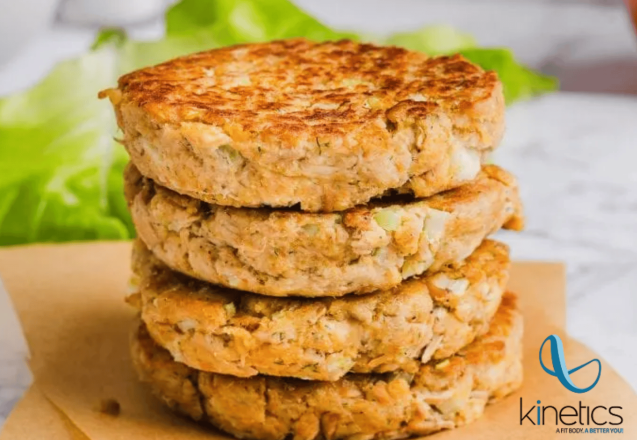
Tuna and Pumpkin Burgers (Fish)

Tuna and Pumpkin Burgers (Fish)

Courtesy of Paulina Cocina

These tuna and pumpkin burgers are a quick, simple, and nutritious meal that comes together with just a few pantry ingredients. The pumpkin adds moisture and a subtle sweetness, while the tuna provides protein and savory flavor. They’re perfect for a light lunch or dinner and cook in just a few minutes in a pan.

Ingredients
(Makes 4–5 burgers)

  • 2 cans tuna, drained
  • 2 tablespoons cooked pumpkin, mashed
  • 1 egg white
  • 1 tablespoon chopped parsley
  • 1 garlic clove, finely minced
  • 2 tablespoons breadcrumbs (add more if needed)
  • 1 tablespoon sesame seeds
  • Ground black pepper, to taste
  • Oil, for cooking

Instructions

  1. In a bowl, mash the drained tuna with a fork until it is fully broken apart.
  2. Add the chopped parsley and minced garlic. Then mix in the mashed pumpkin, sesame seeds, and black pepper. Do not add salt, as canned tuna already contains enough salt and the burgers may become too salty.
  3. Add the egg white and breadcrumbs and mix everything together until it forms a soft dough. The mixture should be firm enough to handle; if it feels too soft, add a little more breadcrumbs.
  4. Form the mixture into balls and gently flatten them to shape the burgers. They do not need to be very thin.
  5. Heat a pan over medium heat with a little oil and cook the burgers until golden brown on both sides.

They pair beautifully with a high-fiber side like a cucumber and tomato salad and a half-cup of quinoa to round out the plate.

Nutrition facts per serving (2 burgers, 150 g, 5.3 oz):

Calories 264 kcal, Fat 10.2 g, Saturated Fat 1.6 g, Carbohydrates 8.8 g, Dietary Fiber 1.1 g, Sugars 0.9 g, Protein 33.2 g, Sodium 460 mg, Calcium 58 mg, Iron 2.2 mg, Potassium 305 mg, Vitamin C 1.3 mg.


Raising Strong, Healthy Eaters (Without the Food Fights)

Raising Strong, Healthy Eaters (Without the Food Fights)

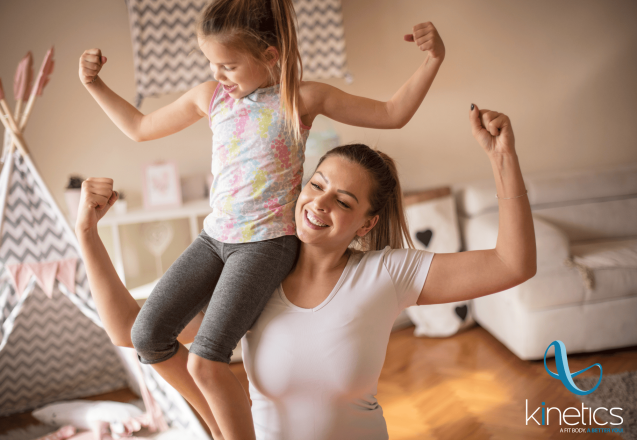
Healthy habits start at home. And when it comes to nutrition, kids aren’t born knowing how to eat well…they learn it from us. Getting your children interested in healthy eating doesn’t require perfection, strict rules, or turning your kitchen into a classroom. It’s about curiosity, connection, and consistency.

Teach Them How to Build a Healthy Meal

Instead of labeling foods as “good” or “bad,” help kids understand balance. A simple framework works wonders:

  • Protein for strength and growth
  • Colorful veggies for vitamins and minerals
  • Whole grains or healthy carbs for energy
  • Healthy fats for brain power

When kids help assemble their own plate—choosing a protein, adding color, picking a carb—they feel empowered, not controlled. Ownership builds confidence, and confidence builds habits.

Let Them Choose One New Veggie

Next time you’re at the grocery store, give your child a mission:
👉 Pick one new vegetable we’ve never tried before.

No pressure to love it. No pressure to finish it. Just explore it. Wash it, cut it, cook it together. Even if they only take one bite, that’s a win. Repeated exposure (not force) is how tastes evolve.

Cook Together = Connect Together

Cooking is more than food prep—it’s quality time. Chopping, stirring, tasting, and laughing in the kitchen creates memories and life skills. Kids who cook are more likely to:

  • Try new foods
  • Eat more fruits and vegetables
  • Develop a healthier relationship with food

Bonus: you’re teaching them a skill they’ll use for life.

Build Habits, Not Rules

Healthy eating isn’t about being perfect—it’s about being consistent. When kids see regular meals, shared family time, and balanced choices modeled day after day, it becomes normal. These small, repeated actions compound into lifelong habits.


Your Challenge This Week

On your next grocery trip, let your child pick one new vegetable they’ve never tried before. Bring it home and prepare a simple meal with it together—no pressure, just curiosity and fun.


Call to Action

At Kinetics, we believe fitness goes beyond workouts—it’s about building strong habits for the whole family. If you want support creating a balanced approach to movement, nutrition, and family wellness, reply to this email or send us a text at 732-314-3086 and our team will help you build a plan that works for your real life.

Strong kids. Strong families. Strong community. 💪